© 2025. All rights reserved.
© 2025. All rights reserved.
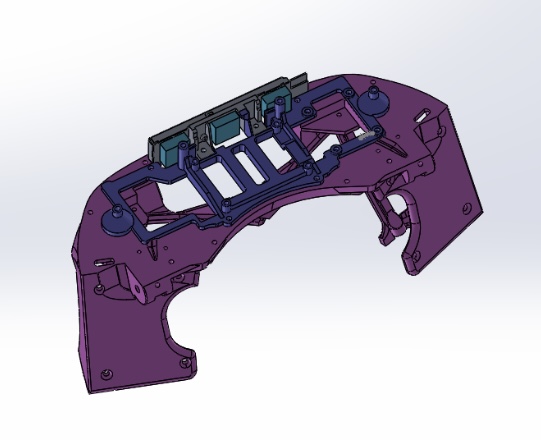
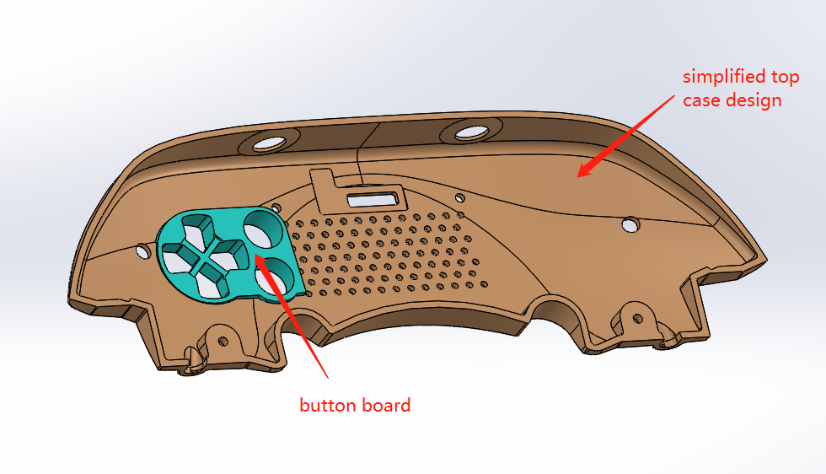
As a Mechanical Engineering intern at NOA Labs, a product development firm in Shenzhen, China, I designed and prototyped components for Project NorthStar – a modular, open-source AR hardware platform developed by Combine Reality and NOA Labs.
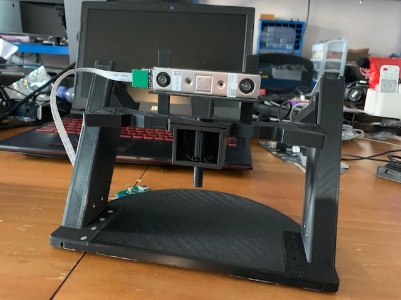
A vertically translatable calibration system for the Project NorthStar AR Headset (Oct. – Dec. 2020)
Current AR models require optical calibration using the Intel t261 camera, but precise positioning of the camera is difficult to achieve. As an ME intern at NOA Labs, I independently designed and prototyped a completely 3D-printable calibration stand and camera holder system that can be vertically actuated to enable more precise positioning of the t261 camera. The vertical actuation mechanism consists of a screw driven by a bevel gear system that is connected to a handle, allowing for continuous, user-controlled motion. I also created a version of this design that is compatible with the 4-camera calibration system, allowing calibration for users with an earlier version of the calibration software.
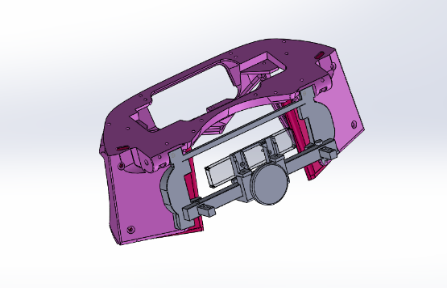
A magnetically-attachable calibration clip capable of multi-directional translation (Dec – Jan 2020)
I independently designed and prototyped a calibration clip that can be magnetically attached to the optics bracket of the headset, eliminating the need for a bulky calibration stand. Additionally, the clip consists of a linear Geneva mechanism that allows for horizontal translation of the camera, accounting for variations in interpupillary distances between users when calibrating. The side rails and pins enable for forward-backward translation, accounting for variations in user eye distance from the camera (e.g., for users with eyewear).